
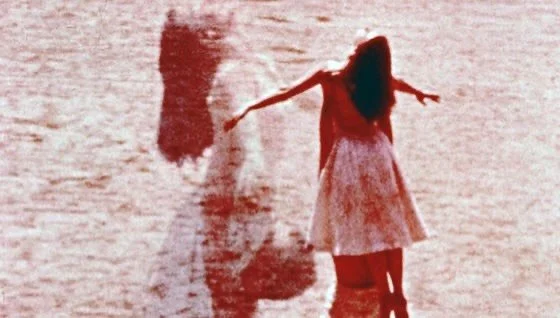
EXHIBITION ReLit Women and Film - Reclaiming Space, Reframing Cinema
WOMEN PIONEERS
VIDEO INSTALLATIONS
Curated by Clare Schweitzer and Physical Cinema Festival in collaboration with marvaða.
Women Film Artists - Writing Their Own Cinematic Language
”Screendance is a history of women’s filmmaking.”
Kelly Hargraves (Dance Camera West) via Cara Hagan (ADF Movies by Movers/Dance on Camera).
As Cara Hagan notes in Screendance from Film to Festival (McFarland, 2022), women and other marginalized groups were drawn to film in its nascent existence, only to be shut out as the form became more industrialized. Compounding this erasure, a lack of careful preservation has resulted in the loss of over 75% of films created before 1930, including entire directorial oeuvres and much of the work of pioneering filmmakers such as Alice Guy-Blanché and Lois Weber.
With this in mind, tracing the histories of screendance can be a daunting task. Yet the traces that remain both expand our understanding of the practice and remind us of the fragility of its preservation. The works presented here highlight the innovation of early artists while acknowledging the forces that led to their disappearance, offering signposts toward other voices in the field whose contributions are still being recognized.
Pioneer Women in Film and Video Art (1940s–1980s) brings together a curated selection from the San Francisco Dance Film Festival, celebrating trailblazing women working across film and video art, alongside a selection of contemporary women filmmakers presented by PCF. Together, these works trace a lineage of experimentation and reaffirm the role of women in reshaping the language of cinema across generations.
Curated by Clare Schweitzer, the program includes pioneering figures such as dancer, choreographer, and video artist Analívia Cordeiro—widely regarded as a pioneer of computer dance and among the first to integrate digital technology with choreography in the 1970s—as well as filmmaker Sara Kathryn Arledge, who began work in 1941 on her film Introspection with the aim of “adding time to painting” and exploring movement as an extension of visual art. In dialogue with these historical works, the contemporary selection further underscores the enduring and evolving contributions of women filmmakers today.
-
J'AIME LES MORTS (IS) | 9' | Katrín Ólafsdóttir
Katrín Ólafsdóttir’s background is in dance and choreography, and she started making Super 8 films as a teenager. She has directed and produced several short films and documentaries and is currently in post-production of her first feature film, The Wind Blew On, made religiously with a homemade formula of Mutual Aid. Along with Bertrand Mandico, she is the founder of the film collective International/Incohérence. Katrín also does photographic work, video performances, and installations. She and collaborator Steinunn Gunnlaugsdóttir have been in the habit of taking over abandoned spaces and performing symbolic attacks. Katrín has exhibited in museums and galleries and has done installations in abandoned man-made structures.
-
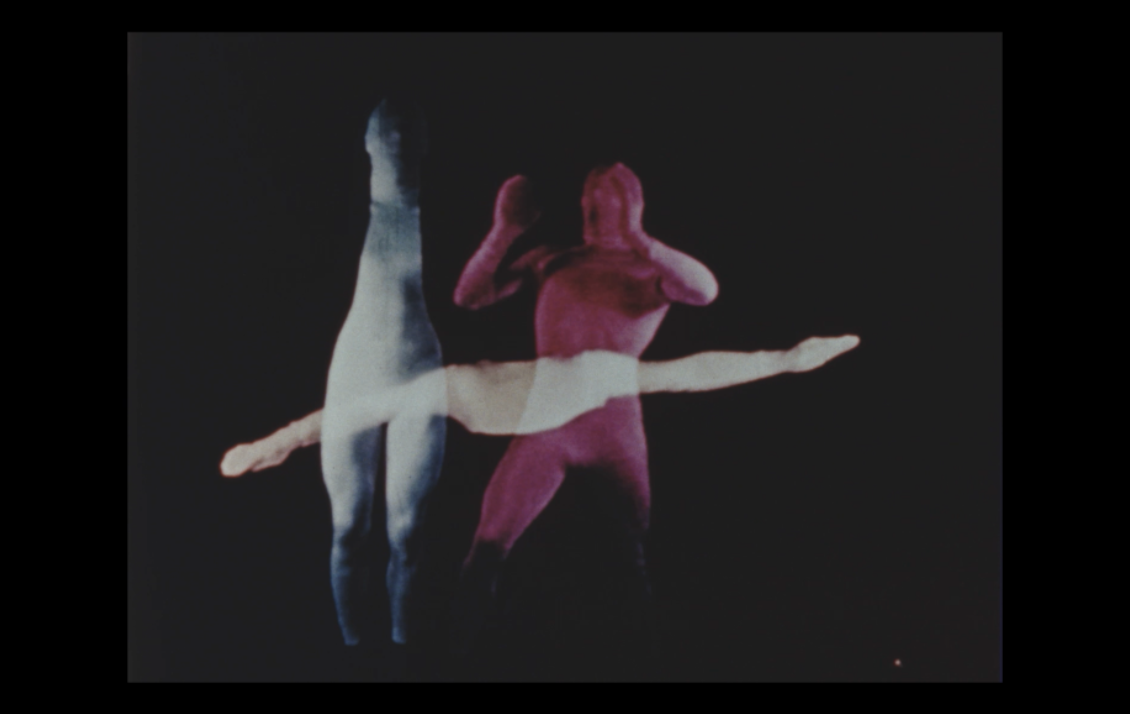
Introspection 1941-1946 (US) | 5'57" | Sara Arledge
The final form of Introspection, which premiered as a part of SFMOMA’s Art in Cinema series on May 2nd, 1947, is notable as it is likely the first abstracted dance films ever created. A visual artist by training, Arledge began work on the film as a means of “adding time to painting” in 1941 and explored every facet of her Kodak Cine Special to do so, placing colored gels over her lenses, using matte inserts to double or triple expose parts of the frame and using a car’s reflective hubcap
Sara Kathryn Arledge’s work was groundbreaking for its time, though her films were not screened with much frequency until decades after their creation. In addition, Arledge was frequently institutionalized against her will for mental illness, highlighting the barriers faced by women artists working in patriarchal spaces.
-
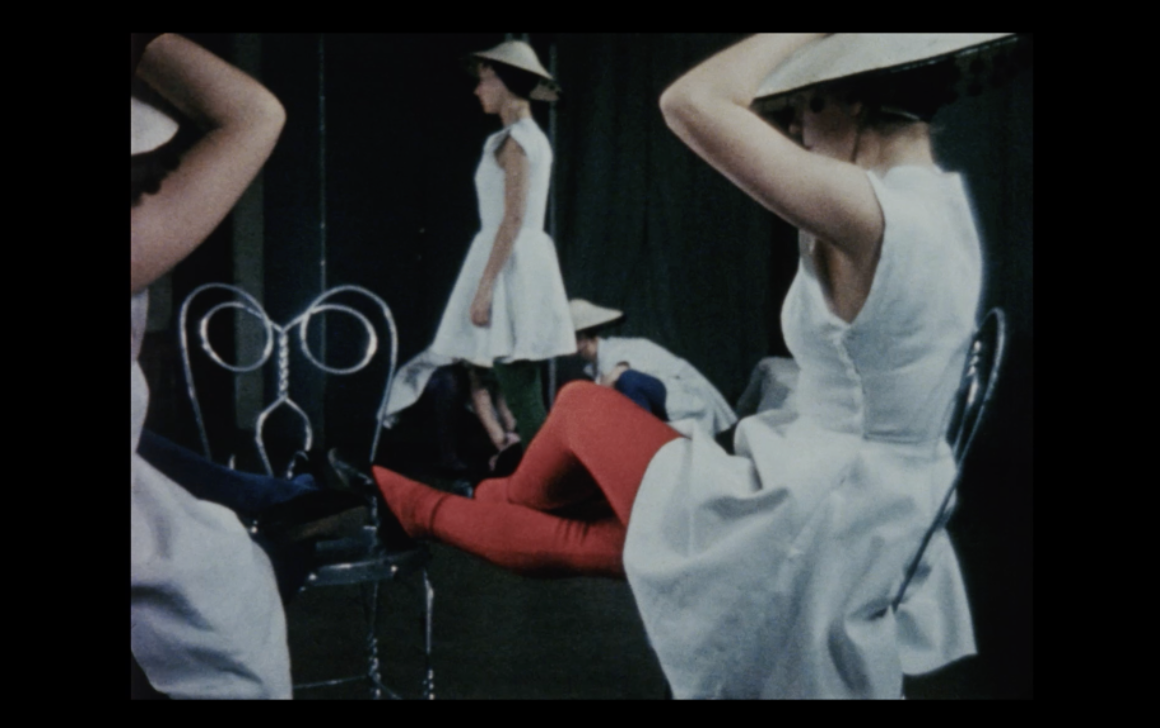
Horror Dream, 1946 (US) | 9'53" | Marian Van Tuyl & Sidney Peterson
Marian Van Tuyl was the founder of Mills College’s Dance Department (the second of its kind in the US) and the founder/editor of the IMPULSE journal, which was one of the first periodicals dedicated to dance scholarship. Van Tuyl met filmmaker Sidney Peterson (founder of the seminal SFAI film program) during the Art in Cinema screening series, which was foundational in catalyzing the creation and community of avant-garde film.
Van Tuyl and Peterson collaborated on two films. The first was Horror Dream, a reworking of a live piece featuring an innovative use of camera placement that disorients the viewer in the space and evokes a feeling of sleep paralysis (amplified by an early John Cage score).
-
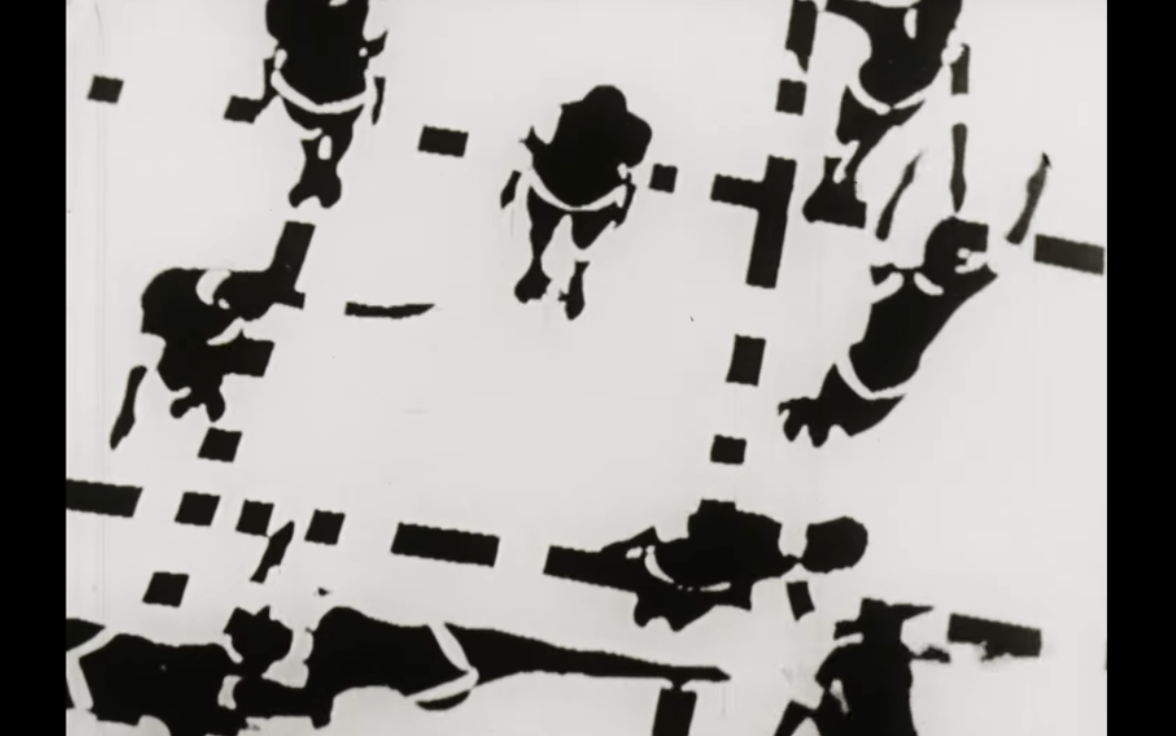
M3X3, 1973 (BR) | 12'32" | Analivia Cordeiro
Analívia Cordeiro was one of the first dance artists to utilize computers in composition and pioneered video art in Brazil and computer dance worldwide in the early 1970s. The relationship between interpretation and programming presupposes both predetermined and undetermined elements, stimulating the creativity of the dancers.
She presented her first computer composition, M3X3, at the Edinburgh International Festival at the age of 19.
-
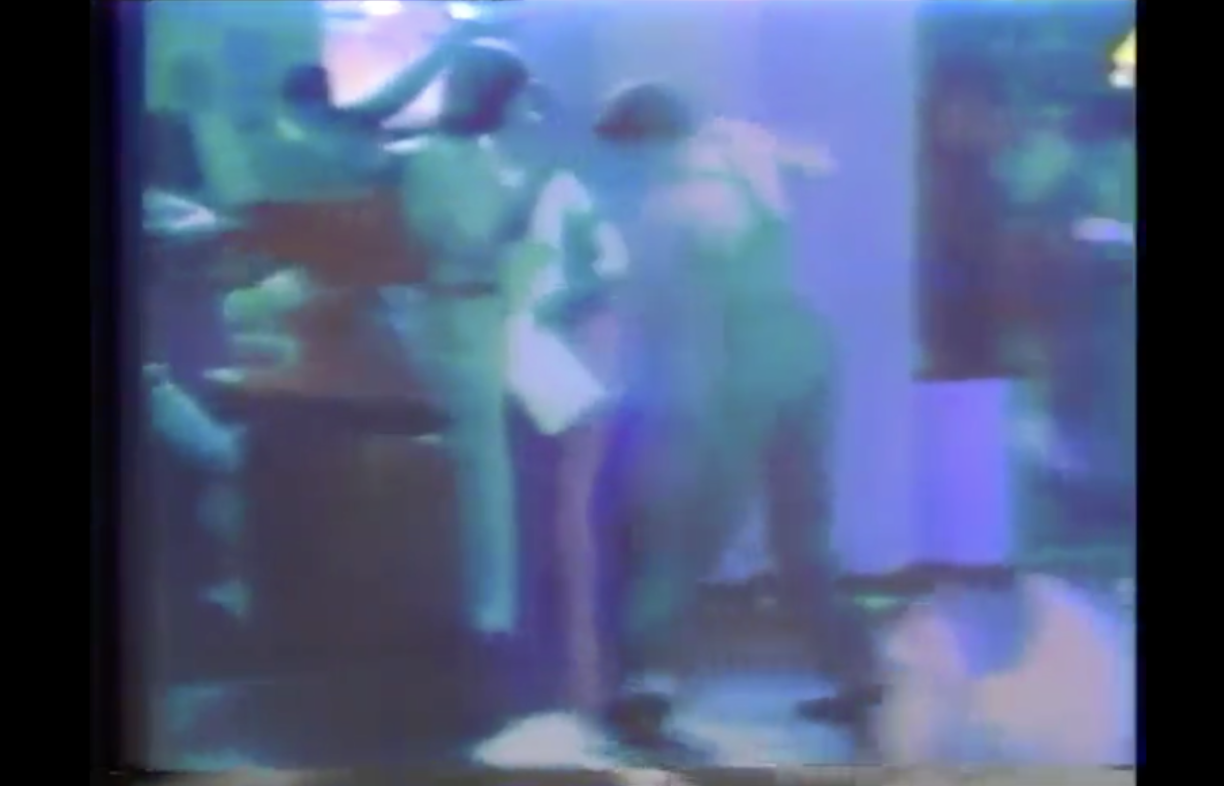
Six Phrases in Real Time, 1976 (US) | 12'47" | Deborah Mangum
This work is a mediated representation of a live performance that took place at Serramonte Shopping Mall in Daly City, just south of San Francisco. In the work, five dancers manipulated six movement phrases, interacting with six monitors in the public space featuring a live relay of events. At certain moments, the cameraperson and dancers would switch roles, and performers would frequently blend in with the movements of the crowd, who were likely unfamiliar with the type of performance they were seeing. The form of the work itself is presented as an interpretation of events rather than a strict documentation, expanding the creative potential of archival methods.
Deborah Mangum was a professor at Lone Mountain College in San Francisco, which boasted an innovative dance program for its time. The school was acquired by a Jesuit university in 1978, at which point the dance department and nearly all records of it were eliminated.